
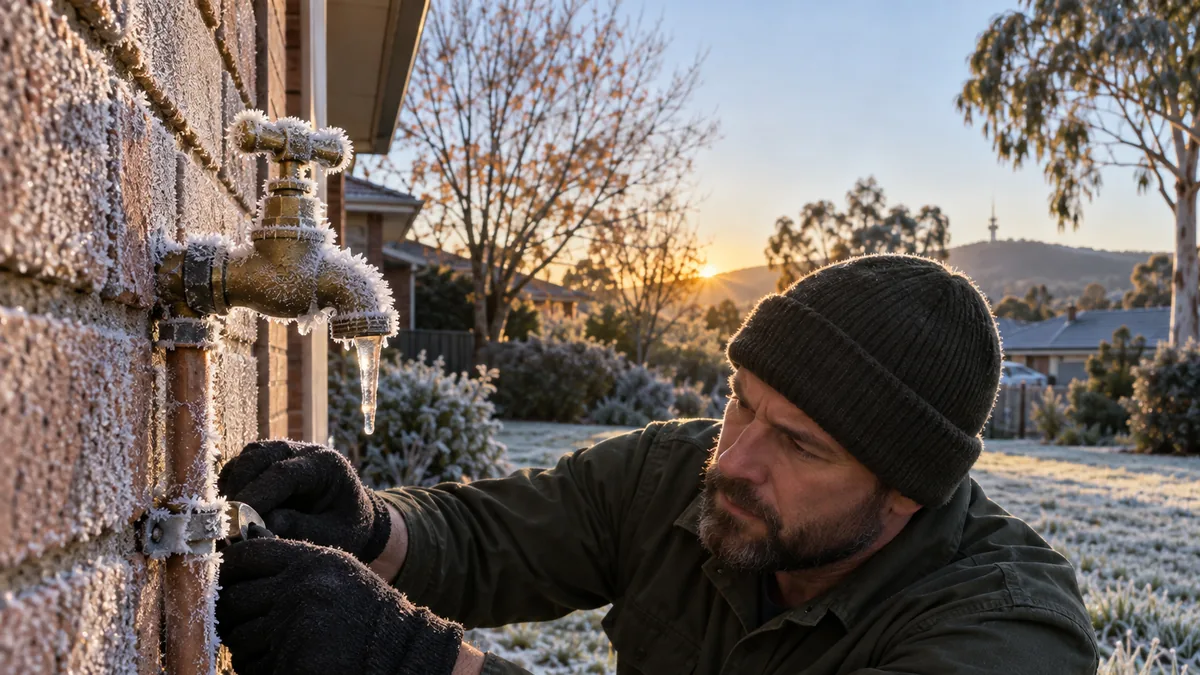
Canberra is the one Australian capital where a plumber expects a run of burst pipes every time the forecast says minus five. Frosts settle most nights from June to August, and the Tuggeranong Valley and the Gungahlin plain are frost hollows where minus eight is not unusual on a still, clear night. This guide covers which pipes are at risk, how to recognise a frozen pipe, how to thaw it safely and what to do before winter so you never have to.
Why pipes freeze in Canberra
Inland, elevated and dry, Canberra loses its heat quickly after sunset. Cold air runs downhill and pools in the low ground, which is why Kambah, Gordon and Conder on the valley floor, and Gungahlin, Amaroo and Ngunnawal on the northern plain, wake to heavier frost than the hill suburbs. Ice takes up more room than water, so a full pipe stretches and splits as it freezes, but the ice plugs the split and nothing leaks. The burst arrives with the thaw, which is why the busiest hours for burst pipe calls in Canberra are mid-morning on a frosty day.
Which pipes are at risk
- Garden taps and the pipe feeding them. Exposed copper on the outside wall with the tap at the end. The tap body and the elbow behind it freeze first.
- Exposed copper on south-facing walls. The south side of a house never sees winter sun, so pipes on that wall stay frozen longest.
- Hot water relief lines. The small copper drain from the relief valve on a storage unit holds water and sits outside. If it freezes, the valve cannot discharge.
- Pipes in unheated roof spaces and under raised floors. Roof-space runs to a bathroom or a solar hot water unit, and the pipes under the suspended timber floor of a weatherboard ex-govie in Ainslie or O’Connor, are barely warmer than the air outside.
- Evaporative cooler water lines. The feed line up to the cooler on the roof is usually left full of water at the end of summer and freezes solid.
- Outdoor hot water units. Exposed inlet and outlet pipes freeze, and a continuous-flow gas unit can freeze internally if it loses power on a cold night.
- Pool and irrigation lines. Poly pipe, solenoid valves and pool equipment above ground crack in a hard frost.
Signs a pipe is frozen
The usual sign is no water, or a trickle, at one tap on a frosty morning while the rest of the house works. If it is the garden tap, the laundry tap or the hot water alone, the frozen section is on the exposed run feeding that fixture. Look along the pipe for frost on the outside, a slight bulge or a bright line where the copper has stretched, and dampness or a small icicle at a joint. If you can already see the split, there is no point thawing it; go straight to the meter.
What to do safely
- Open the tap the frozen pipe feeds, and the taps nearest to it, so the melting ice has somewhere to go.
- Warm the frozen section gently. Towels soaked in warm water and wrapped around the pipe, a hair dryer on low kept moving, or a hot water bottle against the fitting all work. Start at the tap end and work back toward the house so water can escape as it melts.
- Never use a naked flame, a heat gun on high or boiling water. A blowtorch turns the ice inside a sealed pipe to steam and can burst it in your hands, and it sets fire to lagging, weatherboards and timber framing.
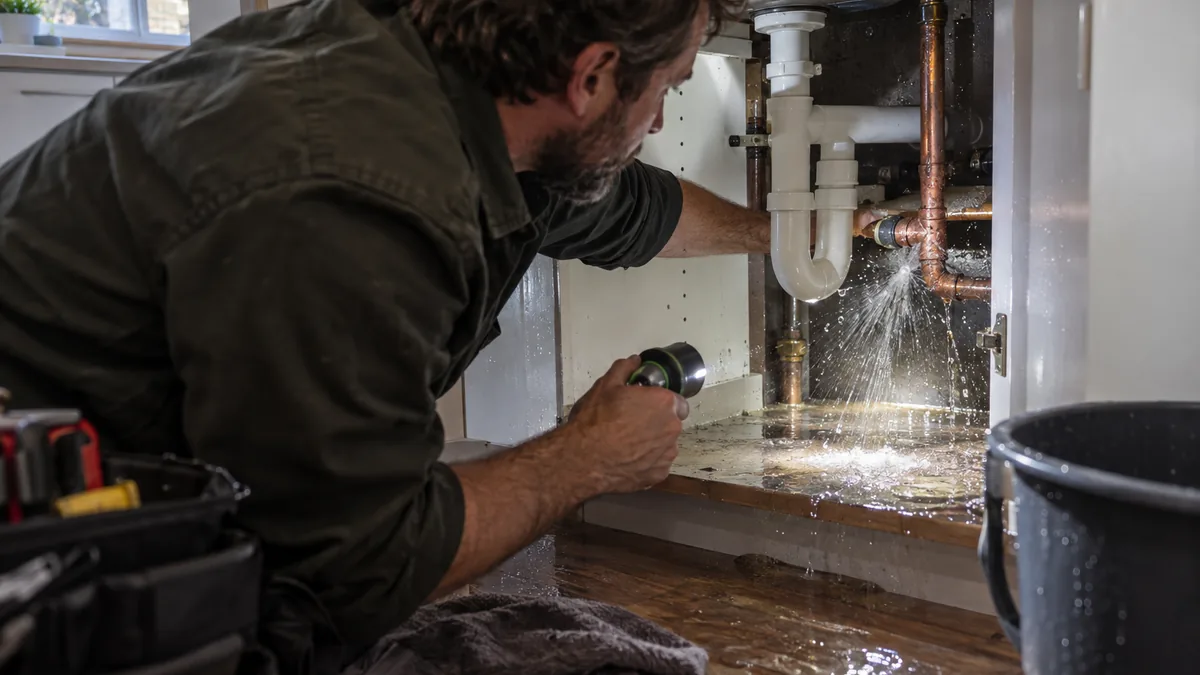
- Watch the pipe as it thaws. If water weeps from a joint or sprays from a line in the copper, the pipe has already split. Turn the water off at the Icon Water meter at the front boundary, leave a tap open to drain the pressure and call for burst pipe repair.
- If the frozen section is inside a wall, under the slab or in the roof, do not cut into anything. Turn the heating up, open the cupboard doors under sinks and call a licensed plumber.
Prevention before winter
Most frozen pipe calls in Canberra are preventable in an afternoon.
- Lag every exposed pipe. Foam lagging, taped at the joints, on every run on an outside wall, in the roof space and under the floor. Garden taps need a lagging cover or an insulated tap cosy over the tap body and the elbow.
- Insulate the relief line. Lag the drain from the hot water relief valve down to its outlet and keep the outlet clear of ice and leaves so the valve can still discharge.
- Drain and isolate garden and irrigation lines. Close the isolation tap to the irrigation system, open the valves and let the lines drain. Drain the pool pump and filter if the pool is not run in winter.
- Cover outdoor units. Lag the inlet and outlet pipes on an outdoor hot water unit and keep the power connected to a continuous-flow gas unit, because its own frost protection needs power to work.
- Drip a tap on the coldest nights. When the forecast says minus five or colder, leave the garden tap or the laundry tap on a slow drip. Moving water freezes far more slowly than still water.
- Keep the house above a minimum temperature when away. Leave the heating on low rather than off if the house will be empty for a winter week, and turn the water off at the meter and drain the lines if it will be empty for longer.
- Get a pre-winter check. A licensed plumber can lag the runs you cannot reach, replace a corroded garden tap and check the hot water unit and its relief valve during a plumbing maintenance visit in autumn, before the first hard frost.
Hot water systems in winter
Winter is when a Canberra hot water system works hardest and fails most often. Incoming water is close to freezing, so a storage tank recovers slowly, and demand for hot showers is at its highest. Frost damages the relief valve, which then drips constantly or, if the line is frozen, cannot relieve at all. Older electric tanks outside on a slab in Tuggeranong and Belconnen, many on their second or third replacement, are the ones most likely to let go on a cold weekend. If the hot water runs out early, the relief line drips all day, the tank weeps from the base or a continuous-flow unit shows an error on a frosty morning, a hot water plumber can tell you whether it is a valve, an element, a thermostat or a tank at the end of its life. New gas network connections in the ACT have not been permitted since December 2023, so a failed gas unit is often replaced with a heat pump or electric storage rather than like for like.
When to call a plumber
Call straight away if a pipe has split and you cannot stop the water, if the frozen section is inside a wall, slab or roof space, if a hot water unit is leaking or has frozen, or if you smell gas near a gas hot water unit. You will be told an honest arrival time on the phone and the rate before anyone is dispatched. If a pipe froze once and thawed without splitting, book a plumber during the day anyway; the same pipe will freeze on the next frost, and the fix is usually lagging or re-routing a short run.
Questions on this topic
At what temperature do pipes freeze in Canberra?
An exposed pipe can freeze once the air temperature stays below zero for a few hours, and Canberra does that most nights from June to August. Minus five is common, and minus eight is not unusual on a clear, still night in the Tuggeranong Valley or on the Gungahlin plain. Pipes on south-facing walls, in roof spaces and under raised floors freeze first because they never see the winter sun.
How do I know if a pipe is frozen rather than broken?
A frozen pipe gives no water, or a trickle, at one tap on a frosty morning while the rest of the house works normally. Look along the exposed run for frost on the outside of the pipe, a slight bulge, or ice at a joint. A broken pipe leaks, sprays or leaves a wet patch. If you can see water escaping, the pipe has already split and the supply needs to be turned off at the meter.
Can I thaw a frozen pipe with a blowtorch or heat gun?
No. A naked flame or a heat gun on high can turn the ice inside a sealed pipe to steam and burst it, and it will set fire to lagging, weatherboards and timber framing. Open the tap the pipe feeds, then warm the pipe gently with towels soaked in warm water, a hot water bottle or a hair dryer on low, starting at the tap end and working back toward the house.
Why did my pipe burst after it thawed and not while it was frozen?
Ice takes up more room than water, so a full pipe stretches and splits while it is freezing, but the ice plugs the split and nothing leaks. When the sun warms the pipe and the ice melts, mains pressure pushes water through the crack and the burst appears. That is why Canberra plumbers get the most burst pipe calls mid-morning on a frosty day rather than overnight.
Should I leave a tap dripping on a frosty night?
On the coldest nights, yes. When the forecast is minus five or colder, leave the garden tap or the laundry tap on a slow drip overnight. Moving water freezes far more slowly than still water, and an open tap gives expanding ice somewhere to go. It is a stopgap for one or two nights, not a substitute for lagging the pipe properly before winter.
Does a pre-winter plumbing check help?
Yes. A licensed plumber can lag the runs you cannot reach in the roof or under the floor, insulate the hot water relief line, replace a cracked garden tap, check the relief valve and inspect a hot water system that is close to the end of its life, all in daylight and in autumn rather than on a frosty morning when every plumber in Canberra is already busy with bursts.
- frozen pipes
- frost
- winter plumbing
- hot water
- garden taps
- prevention

 Request a callback