

Search for the cost of an emergency plumber in Canberra and you will find pages that quote a round figure, then spend three paragraphs explaining why it does not apply to you. This guide does not do that. A plumber who has not seen the job cannot price it honestly, because “water is coming through the laundry ceiling” can mean a flexi hose that takes twenty minutes or a copper line under a slab in Wanniassa that takes most of a day. What it can do is explain what moves the price.
Call-out, hourly rate or fixed quote
Emergency plumbing in Canberra is priced in one of three ways, and often a combination. A call-out or attendance fee covers getting a licensed plumber and a stocked van to your door. An hourly rate covers time on site. A fixed quote covers a defined repair, agreed before the work starts.
The honest model, and the one described on the pricing page, is this: the rate and any call-out fee are explained on the phone before anyone is dispatched, and the repair is quoted once the plumber has diagnosed it and before any work begins. That gives you two points where you can say no.
After-hours and public holiday loading
Nights, weekends and public holidays cost more than a weekday daytime visit. Somebody is being paid to leave a warm house at two in the morning in July. The loading should be stated on the phone, not discovered on the invoice.
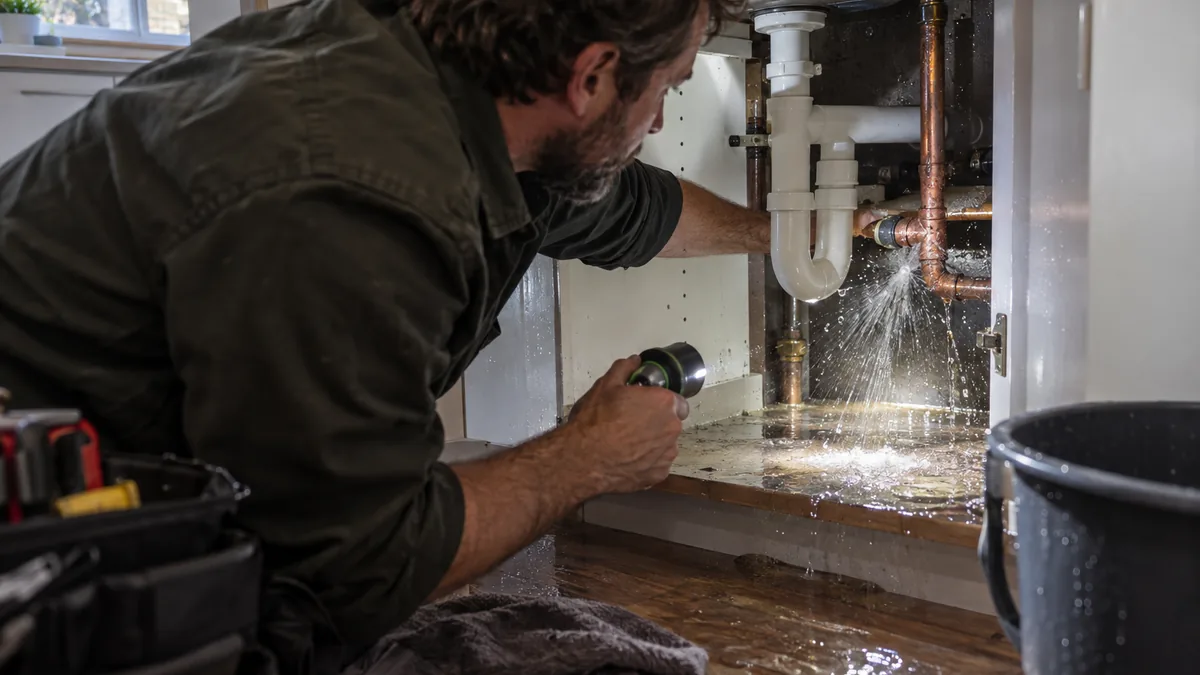
The biggest cost decision is whether to call now or wait. If the problem is causing damage or has taken away water, a working toilet or hot water in winter, call now. If it is a dripping tap or a slow basin, a good plumber will say so and book a daytime visit at the lower rate.
Time of year: winter changes the numbers
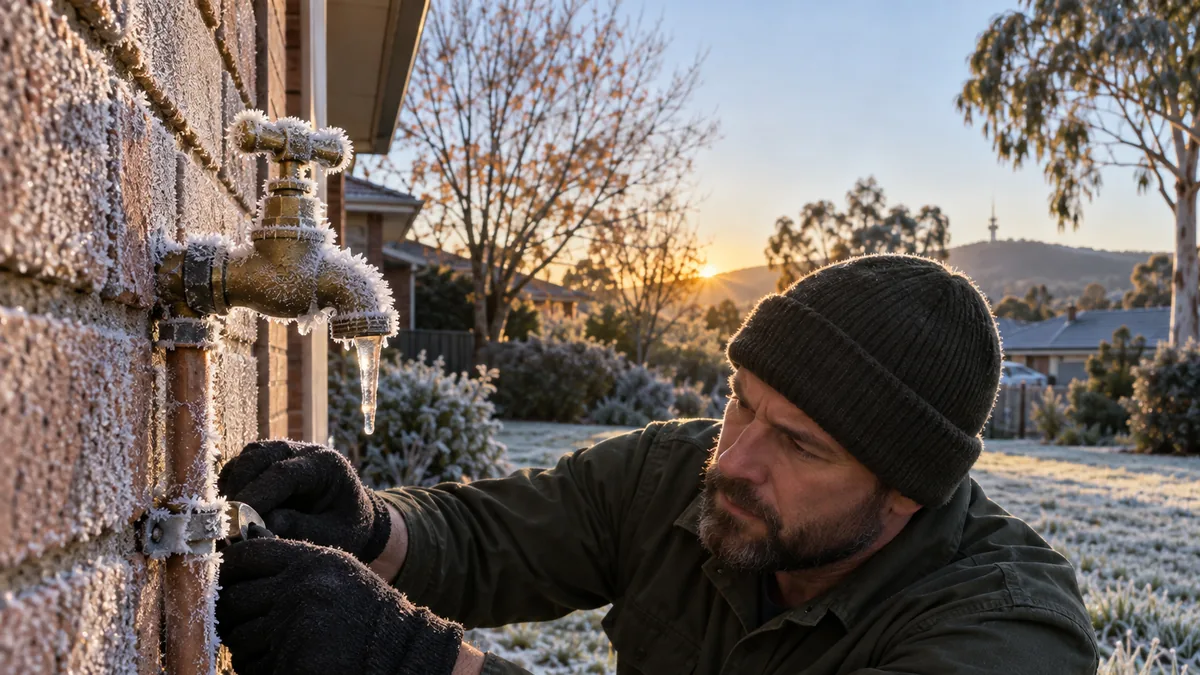
Canberra winters are hard on plumbing. Frosts most nights from June to August, minimums of minus five and lower, and pipes on south-facing walls, in unheated roof spaces and on garden taps that freeze, split, and let go when the sun reaches them mid-morning. Burst pipe calls peak on bright, frosty mornings, and hot water systems fail under the heaviest load of the year.
Demand is higher, so arrival times stretch, which is why you are told an honest arrival time rather than a number of minutes. The repairs are often bigger too, because a frozen line rarely splits in only one place. Lagging exposed pipes before the first frost is the cheapest plumbing work you will ever pay for.
Parts: hot water units, valves and hoses
Labour is only part of the invoice. A hot water system is the largest part most households buy from a plumber, and the choice between an electric storage tank, a continuous-flow unit, a heat pump or a solar system changes the figure a great deal. With the ACT phasing out fossil gas, a failed gas unit is usually the moment to talk about a heat pump rather than a like-for-like swap, and the hot water plumber will price each option before anything is ordered.
Smaller parts matter too. Pressure limiting valves fail regularly in Gungahlin and other low-lying areas where mains pressure runs high. Flexi hoses under sinks have a working life and then burst. Relief valves on hot water tanks are damaged by frost. Each should be a separate line on the quote.
Access: apartments, slabs and under-house
Where the pipe is changes how long the job takes. A leak inside a slab-floor townhouse in Franklin, a burst riser in an apartment block on Northbourne Avenue that needs a building manager and a booked lift, a galvanised line in the crawl space under a 1930s weatherboard in Ainslie, or a sewer under a driveway in Kambah all take longer than a garden tap in full view. Any access cost is explained before starting, and anything worse found once the pipe is exposed is quoted before the extra work goes ahead.
Diagnostics: CCTV and leak detection
Finding the problem is real work and is quoted as its own item. A CCTV camera inspection shows whether a sewer blockage is roots in a cracked earthenware pipe, a joint pulled apart by reactive clay, or a sagged section, and whether you need a clear, a reline or a replacement. Acoustic and thermal leak detection finds a slab leak without pulling up half the floor. Paying for the diagnosis once is cheaper than clearing the same drain every few months without learning why it blocks.
Access Canberra compliance work
There is no local council in the ACT. Plumbing, drainage and gasfitting must be done by tradespeople licensed by Access Canberra, and larger work such as new drainage, relocating fixtures or altering the sewer connection involves notification and inspection through the ACT Government. Emergency repairs rarely need you to arrange anything yourself, but where compliance work is required the plumber lodges it, and its cost belongs on the quote, not at the end.
Queanbeyan is in New South Wales
Queanbeyan, Jerrabomberra, Karabar and Googong are a short drive from Tuggeranong down the Monaro Highway, but they are in NSW. The plumber works there under a NSW Fair Trading licence, the utility is Queanbeyan-Palerang Regional Council rather than Icon Water, and the compliance paperwork is different. The travel and paperwork are real and should be listed rather than absorbed into a vague labour figure.
How to compare quotes
If you have time for more than one quote, compare them on the same basis. Ask each plumber whether the figure includes the call-out fee, whether labour is hourly or fixed, which parts and brands are included, whether diagnostics are separate, and what happens if the pipe turns out worse than expected. A quote that looks cheaper because it leaves the parts out is not cheaper. A quote that names the part, the brand and the warranty is one you can hold the plumber to.
What a good quote includes
A written quote you can rely on sets out the call-out fee if one applies, the labour, each part with its price, any diagnostics, any Access Canberra or NSW compliance work, and what is excluded. It says what could change the price once the pipe is exposed. It carries the business name and licence number. The FAQ page explains how to ask for one.
Insurance reports
Most home and contents policies cover sudden, accidental water damage, usually called escape of liquid. They generally do not cover the worn pipe, hose or valve that failed, or damage from a slow leak that was left. Some cover the cost of finding the leak, so read the policy for exploratory costs. Every insurer wants a plumber’s written report describing the cause, the location and the repair, plus photographs taken before the clean-up. Ask for the report on the day and keep the failed part.
How to avoid paying twice
The most expensive plumbing job is the one done twice. Clearing a drain without finding the crack that lets the roots in means another call in three months. Replacing a hot water unit in Gungahlin without replacing the failed pressure limiting valve that killed it means a short life for the new one.
Ask the plumber one question on site: what caused this, and what else is likely to go the same way. A plumber who answers plainly, quotes before starting, puts it in writing and shows you the failed part is the one worth calling again. That is honest pricing, and it costs less than any round figure on a search results page.
Questions on this topic
Is it cheaper to wait until morning to call a plumber in Canberra?
If the problem is not causing damage, yes. A dripping tap, a slow drain or a blocked toilet in a house with a second bathroom can wait for the weekday daytime rate. Water you cannot stop, a sewer backing up, no water at all, a gas smell or no hot water in the middle of a Canberra winter cannot wait, and the damage from leaving them costs far more than the after-hours difference.
Should an emergency plumber charge a call-out fee?
Many do, and it is reasonable: it covers getting a licensed tradesperson and a stocked van to your door at any hour. What matters is that it is stated on the phone before dispatch, that you can decline at that point without being charged, and that it appears as its own line on the invoice rather than being hidden inside the labour rate.
Can I get a fixed price before the plumber arrives?
Not an honest one. A blocked drain in Kambah might be a quick clear or a collapsed earthenware pipe full of roots; a wet patch on a slab in Kaleen might be a flexi hose or a copper line that needs rerouting. What you can get before arrival is the rate and any call-out fee. What you should get before work starts is a written price for the specific repair.
Why does a Queanbeyan job get priced differently from a Canberra job?
Queanbeyan, Jerrabomberra, Karabar and Googong are in New South Wales, so the plumber works under a NSW Fair Trading licence rather than an Access Canberra one, and the water and sewer utility is Queanbeyan-Palerang Regional Council rather than Icon Water. Different compliance paperwork and a longer drive from Tuggeranong both show up on the quote, and they should be listed rather than buried.
Does home insurance pay for the emergency plumber?
Most home and contents policies cover sudden, accidental water damage from a burst pipe or flexi hose, and some cover the cost of finding the leak. They generally do not pay to replace the worn pipe, valve or hose that failed. Check the policy wording for escape of liquid and exploratory costs, photograph everything before the clean-up, keep the failed part and ask the plumber for a written report.
- emergency plumber cost
- call-out fee
- after hours rates
- Canberra
- quotes
- insurance

 Request a callback