
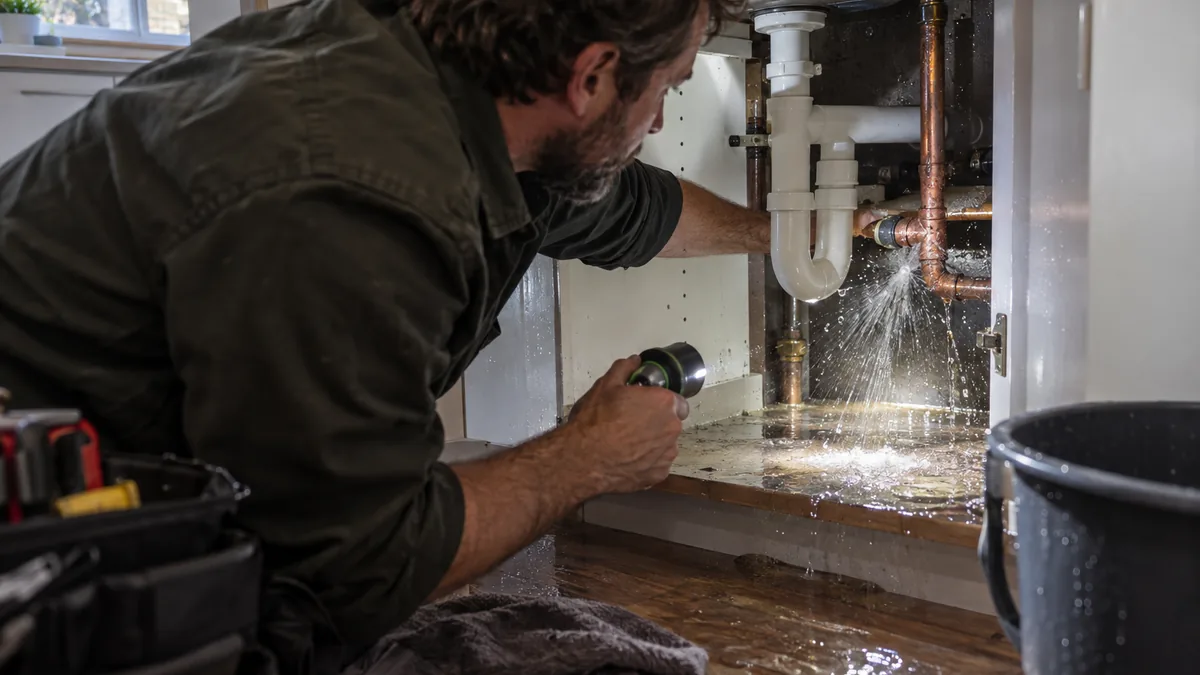
A burst pipe under mains pressure does most of its damage in the minutes before anyone stops the water. In Canberra that damage usually lands on a concrete slab in Kambah or Kaleen, in the ceiling of the apartment below in Braddon or Gungahlin, or across the timber floor of an ex-govie in Ainslie. The plumber is on the way and you will be told an honest arrival time on the phone. What you do while you wait decides how much of the home is wet when they get there. Work through these steps in order.
1. Turn the water off at the Icon Water meter
In a house, the meter belongs to Icon Water and sits at the front boundary, usually in a plastic or concrete box in the ground near the driveway or the front fence, sometimes on a short stand. Lift the lid. There is a tap handle or a lever on the house side of the meter. Turn the tap clockwise until it stops, or swing the lever across, and the whole property is isolated. Everything on the house side of that meter is your pipework, so the repair is yours to arrange, but stopping the flow costs nothing.
Townhouse complexes in Wanniassa, Gordon or Harrison often have a bank of meters near the driveway entrance, one per unit, not always labelled. If the labels are missing, turn off the one you think is yours and check a tap inside.
In an apartment there is usually no meter you can reach. Look for the unit isolation valve instead: under the kitchen sink, in the laundry cupboard, behind an access panel in the bathroom, or in a services cupboard in the corridor. If you cannot find it within a minute, call the building manager or the strata contact, who can isolate the riser for your floor.
If the water is coming from a single fixture, such as a flexible hose under a vanity or the cistern connection behind a toilet, the small mini-stop tap at that fixture stops it on its own and the rest of the home can stay on.
2. Open a tap to drain the pressure
Once the meter or the valve is closed, open the lowest tap in the house, or a garden tap, and leave it running. The pipes still hold water under pressure, and the burst will keep spraying until that pressure is gone. Opening a tap lets it drain out somewhere harmless and the flow at the split usually drops to a dribble within a minute or two. Leave it open until the plumber arrives.
3. Make the power safe
If water is coming through a light fitting, tracking down a wall with power points, or pooling near an appliance or the switchboard, turn the electricity off at the main switch before you touch anything in that room. If the water is nowhere near electricity, leave the power on; you will want light, heating and fans as soon as the water is off, especially on a winter night.
4. Protect floors, ceilings and the unit below
Move rugs, furniture legs, cables and anything electrical out of the wet area or up on blocks. Lift the edge of carpet so the underlay can start draining. Put a bucket under any drip from a ceiling and do not stand under a ceiling that is sagging with water; a small hole at the lowest point releases it into the bucket rather than all at once. Towels rolled across doorways slow the spread to the next room.
In an apartment or a two-storey townhouse, assume the water has already reached the floor below. Knock on the neighbour’s door or call the building manager so they can move their belongings and photograph their side. Strata insurers will want to know whether the failed part was inside your lot or in common property, and photographs from both apartments settle that quickly.
5. Call the plumber with the right details
Tell them your suburb and street, whether the water is off, where the water is coming from, whether it is clean water or waste, whether it has reached a neighbour, and how they will get in, including a gate code or lift access. Say whether the pipe is visible or inside a wall or slab. That lets the plumber explain the rate honestly before anyone is dispatched, bring the right fittings, and coordinate with the building manager before arriving rather than after. The burst pipe repair page describes what happens on arrival: isolate, locate, quote, repair, test.
6. Photograph everything and keep the failed part
Before anyone starts mopping, photograph the source, the water on the floor, the damage to walls and ceilings, and anything ruined. Photograph the meter reading too. When the plumber cuts out the split pipe or replaces the burst hose, ask to keep the old part. Most home and contents policies cover sudden, accidental water damage but not the worn part itself, and not damage from a slow leak that was left. The plumber’s written invoice or report stating the cause, the location and the work done is what the claim rests on.
7. Start drying straight away
Open windows, run fans and, if you have one, a dehumidifier. Pull up wet carpet and underlay. Canberra winter air is dry, so ventilation works even when it is cold; keep the heating on in the wet room as well. The first day decides whether a floor dries out or grows mould behind the skirting. If the damage is large, tell the insurer now and ask about a restoration company; many policies include drying and make-safe.
Why this happened
Canberra bursts have a handful of usual causes, and the suburb often tells the plumber which one to expect.
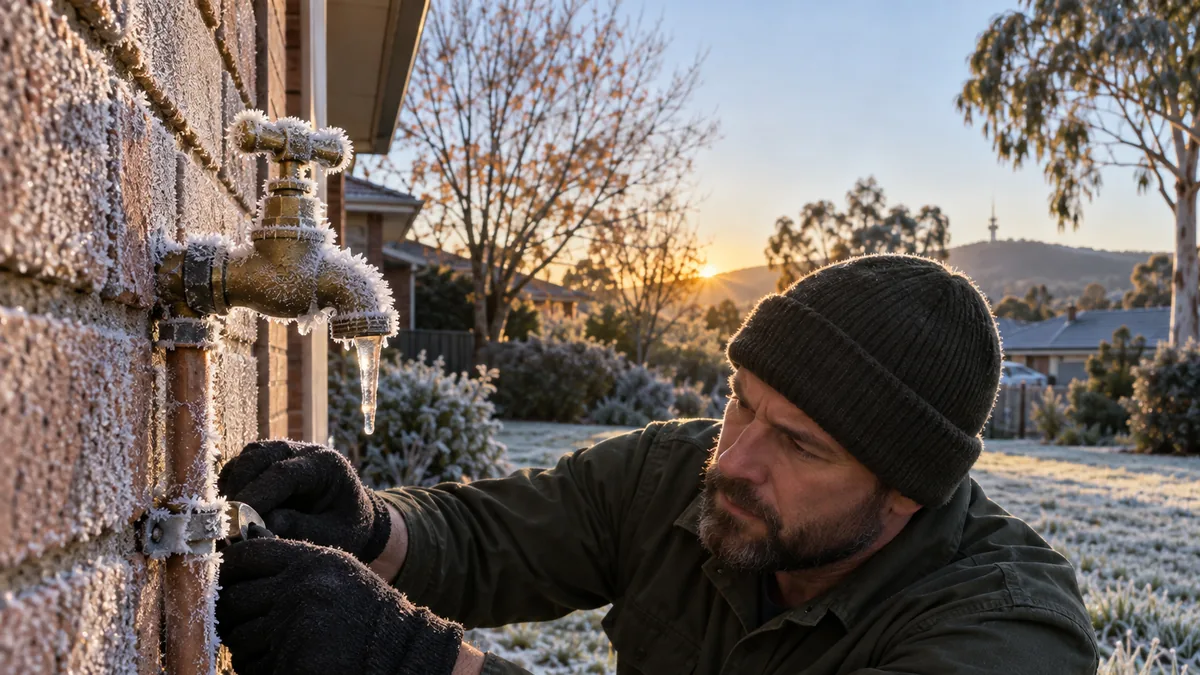
- Frost split on an exposed pipe. From June to August the overnight minimum drops to minus five and colder. Water freezes in a garden tap line, a copper pipe on a south-facing wall or the relief line on a hot water unit, the ice expands and splits the pipe, and the burst appears when it thaws the next morning. The frozen pipes winter guide covers this in detail.
- Galvanised steel in ex-govie homes. Original water lines in 1920s to 1960s houses in Ainslie, O’Connor, Narrabundah and Griffith rust from the inside until they pinhole or let go at a thread.
- Copper under the slab. Brick veneer homes on concrete slabs in Tuggeranong and Belconnen have copper pipework that is now thirty to fifty years old. It corrodes at joints or wears through where it rubs on concrete; the first sign is often a warm patch on the floor or a water bill that has jumped.
- Flexible hoses. The braided hoses under sinks, vanities and toilets fail without warning and are behind a large share of apartment floods in Braddon, Kingston Foreshore and the Gungahlin town centre.
- Pressure limiting valves in Gungahlin. Newer estates run mains-pressure hot water behind a pressure limiting valve. When the valve fails, the full mains pressure hits pipework and fittings that were never sized for it.
- Ground movement on reactive clay. Much of Canberra sits on clay that swells in wet years and shrinks in dry ones. Rigid pipes and joints crack as the ground moves, which is why buried lines in older suburbs fail after a long drought or a very wet season.
The best prevention is unglamorous: replace flexible hoses on a schedule rather than when they fail, lag exposed pipes before winter, and have older pipework looked at during a plumbing maintenance visit before it decides the timing for you.
Questions on this topic
Where is the water meter on a Canberra house?
At the front boundary, on the side nearest the street main, in a plastic or concrete box set into the ground or on a short stand near the fence. Icon Water owns the meter itself; the tap or lever on the house side of it is what you turn to isolate the property. Turn the tap clockwise until it stops or swing the lever across. Find it on a quiet afternoon so you are not searching with a torch on a frosty night.
How do I turn the water off in a Canberra apartment or townhouse?
Townhouse complexes usually have a bank of meters near the driveway entrance, one per unit. Apartments have a unit isolation valve instead, commonly under the kitchen sink, in the laundry cupboard, behind a bathroom access panel or in a services cupboard in the corridor. If you cannot find it quickly, call the building manager, who can isolate the riser. A burst flexible hose can be stopped at the small tap under that fixture alone.
Should I switch the electricity off after a burst pipe?
Only if water is near it. Water coming through a light fitting, running down a wall with power points, or pooling around an appliance or the switchboard means you switch off at the main switch before touching anything in that room. If the water is well away from electricity, leave the power on so you have light, heating and fans running once the water is stopped.
What should I tell the plumber on the phone?
Your suburb and address, whether the water is off, where it is coming from, whether it is clean water or waste, whether it has reached a neighbour or the unit below, whether the pipe is visible or inside a wall or slab, and how to get in. With that the plumber can give you an honest arrival time, explain the rate before dispatch, and bring the right fittings for the job.
Will home insurance cover a burst pipe in Canberra?
Most home and contents policies cover sudden, accidental water damage from a burst pipe or flexible hose, including carpet, flooring and plasterboard. They generally do not cover the worn pipe or hose itself, or damage from a slow leak that was ignored. Photograph everything before cleaning up, keep the failed part, and ask the plumber for a written report stating the cause, the location and the repair carried out.
Why do pipes burst more often in Canberra winters?
Canberra has frosts most nights from June to August, with minimums of minus five and colder in the Tuggeranong Valley and on the Gungahlin plain. Water in exposed pipes, garden tap lines and hot water relief lines freezes overnight, the ice expands and splits the pipe, and the burst shows itself when the ice thaws in the morning. Lagging exposed pipes before winter prevents most of these calls.
- burst pipe
- Icon Water meter
- flexi hose
- apartments
- insurance
- frost

 Request a callback