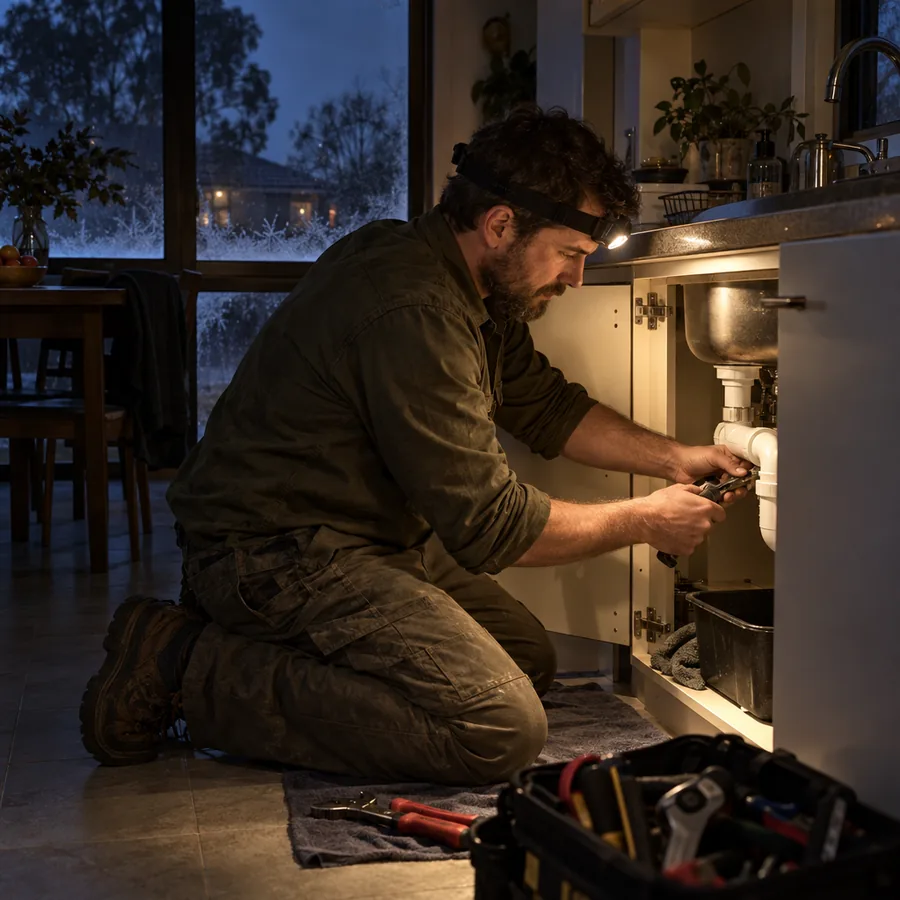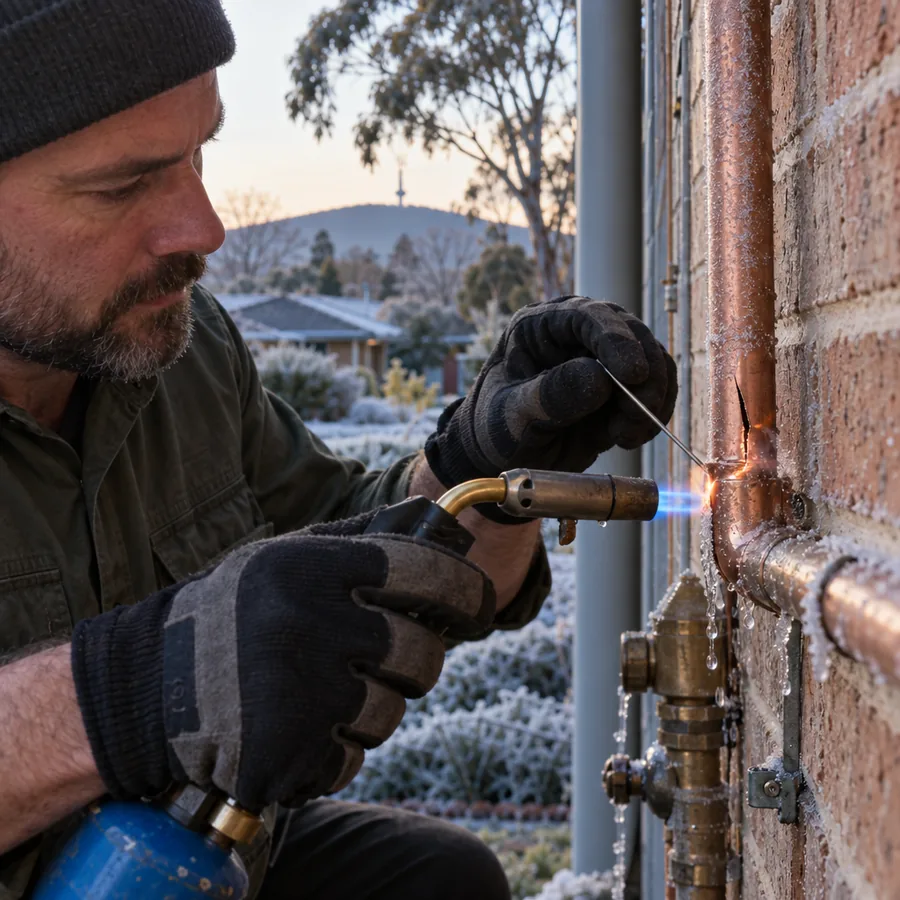
A burst pipe in Canberra usually announces itself on a frosty morning. The pipe froze overnight, the ice split the copper or the fitting, and nothing happened until the sun reached the wall and the ice let go. This page covers what bursts in Canberra homes and why, how to shut the water off at the Icon Water meter, how a burst you cannot see is found under a slab or inside a wall, what the repair involves and what your insurer will ask for.
Why winter is burst pipe season in Canberra
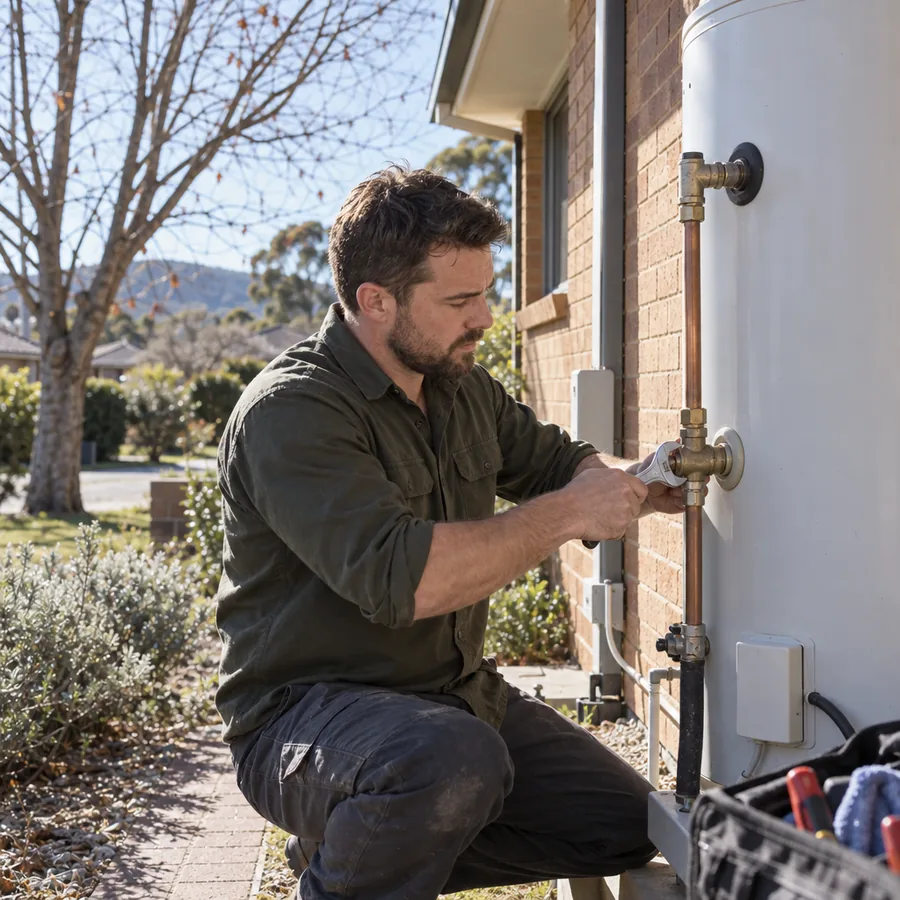
Canberra has frosts most nights from June to August, with minimums below minus five and colder in the valleys. Water expands as it freezes, and any pipe holding still water in the cold is at risk: garden taps and the pipe feeding them, exposed pipework on south-facing walls that never see the winter sun, hot water relief drain lines, the water feed to an evaporative cooler on the roof, and pipes in unheated roof spaces, carports and outside laundries. Homes on the higher, colder sides of Tuggeranong under Mount Taylor and Isaacs Ridge and the open blocks of Gordon and Banks tend to see the worst of it.
The split forms while the pipe is frozen but the leak only appears with the thaw, which is why burst pipe calls cluster between breakfast and lunch on clear, still, cold days rather than overnight. If you find a garden tap or outside pipe frozen, do not pour boiling water on it. Let it thaw slowly, watch it closely once it does, and know where the meter is. The frozen pipes winter guide explains lagging and tap covers in detail.
Galvanised lines in ex-govie homes
The 1920s to 1960s ex-govie brick and weatherboard homes of Ainslie, Braddon, Turner, O’Connor, Dickson, Griffith, Narrabundah and Kingston were plumbed in galvanised steel, and a surprising number still run on it. Galvanised pipe rusts from the inside out. The bore narrows over decades until the pressure at the kitchen tap drops to a dribble, the water runs brown after the house has been empty for a weekend, and eventually a pinhole or a split opens, often at a threaded joint or where a later copper extension was joined to the original steel.
A burst galvanised line is not patched. The failed section is cut out and replaced with copper or PEX, and the plumber will tell you plainly how much of the rest of the line is in the same condition.
Copper under slabs in Tuggeranong and Belconnen
The 1970s to 1990s brick veneer homes that fill Kambah, Wanniassa, Monash, Calwell, Isabella Plains, Kaleen, Florey, Macquarie and Hawker were mostly built on concrete slabs, with copper water pipes run under the slab or through it to the wet areas. That copper is now thirty to fifty years old. It pinholes from the inside, usually at a bend or a soldered fitting, and the reactive clay under the slab makes it worse: the clay swells in a wet winter and shrinks in drought, the slab moves with it, and every joint in the pipe takes the strain.
The first signs of an under-slab burst are a warm patch on the floor where the hot line has let go, tiles or floorboards lifting, the meter turning with every tap off, or a water bill that has jumped. The plumber confirms the leak with a pressure test on the isolated line, then narrows the location with acoustic listening equipment and thermal imaging so that either one small section of slab is opened or, very often in these suburbs, the slab is not opened at all and the failed run is abandoned and rerouted through the roof space.
Flexi hoses in apartments and townhouses
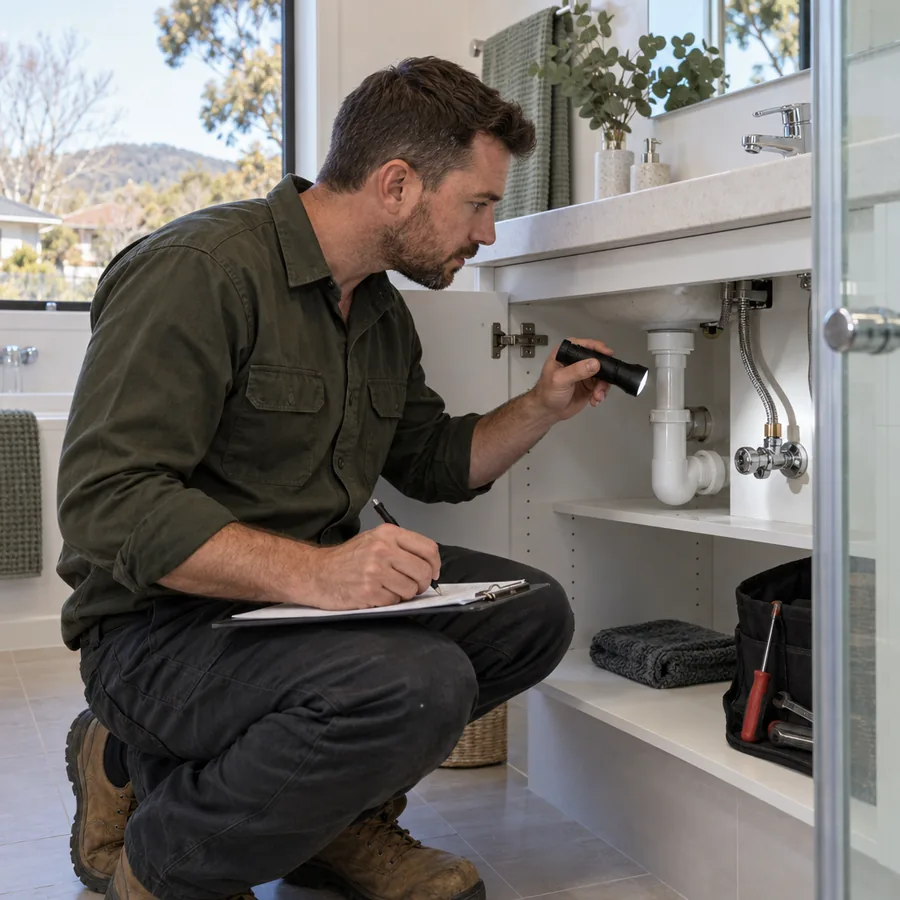
In the apartments of Braddon, Kingston Foreshore, Dickson, the Woden and Belconnen town centres, Gungahlin and Greenway, and in the ex-govie townhouse complexes across Tuggeranong, the most common burst is not a pipe at all. It is the braided flexible hose under a vanity, kitchen sink or toilet cistern. The rubber liner inside splits without warning, water sprays under mains pressure into a cupboard, and in an upstairs unit it is through the floor and into the neighbour’s ceiling before anyone notices.
Mains pressure in Canberra varies with the hills. Low-lying homes and units get high pressure that shortens the life of every hose and valve in the building unless a pressure limiting valve is fitted and working, and in many 1990s and 2000s Gungahlin homes that valve has now failed. Replacing flexi hoses as a set, as soon as the braid shows any rust, is the cheapest insurance in a unit. Every unit has its own isolation valve, usually in the laundry, a cupboard or the meter room on the floor, and the building manager knows where.
Isolating the water at the Icon Water meter
Icon Water owns the water main in the street and the meter at the front of the block. Everything on the house side of the meter, including the service line across the front yard, belongs to the owner. The meter sits near the front boundary in a box at ground level. Lift the lid, turn the tap on the house side off, then open a tap inside to drain the pressure. If the meter tap is seized or the meter itself is leaking, do not force it: report it to Icon Water, and call for the plumber to isolate the property another way. In Queanbeyan, Jerrabomberra and Googong the same split applies, with Queanbeyan-Palerang Regional Council as the utility.
The repair, the test and the paperwork
Split copper is cut back to sound pipe and joined with new fittings, or rerouted if the run is failing in more than one place. Galvanised is replaced. Flexible hoses are swapped for rated ones. A pressure limiting valve that has failed is replaced and the pressure checked at a tap. Every repair is pressure tested before the water is turned back on, and exposed pipework around the repair is lagged so the same section does not freeze again the following week.
Sudden water damage from a burst pipe is covered by most home and contents policies; the worn-out pipe itself and damage from a slow leak that was left usually are not. Insurers ask for a written plumber’s report stating the cause, the location and the repair, and that report is part of the job. Photograph the damage before anything is cleaned up, keep the failed part, and start drying the room as soon as the water is off. The blog post on what to do when a pipe bursts walks through the first hour.
Before the first frost
Lag exposed pipes and garden taps, drain and isolate evaporative cooler lines at the end of summer, check the hot water relief line drains freely, replace flexi hoses that show rust, and find the meter while it is daylight. A plumbing maintenance visit in autumn covers all of it, and if a pipe lets go anyway, the 24 hour plumber page explains what happens when you call.
What is included
- Guidance on the phone to shut off the Icon Water meter or the unit isolation valve and drain the pressure
- Location of hidden bursts under slabs and inside walls with pressure testing, acoustic listening and thermal imaging
- Repair or replacement of the split pipe, corroded galvanised section, failed fitting or flexible hose
- Rerouting of failing copper through the roof space where that is cheaper and better than cutting a slab
- Pressure test of the repaired line before the water is turned back on
- Check of pressure limiting valves, relief lines and other exposed pipework likely to freeze next
- Written report describing the cause, location and repair for your insurance claim
Signs you should call now
- Water running from a wall, ceiling, eave or under a kitchen or bathroom cabinet
- A garden tap, outside pipe or hot water relief line that started leaking as the frost thawed
- A warm or damp patch on a concrete slab floor, or lifting floorboards and tiles
- The Icon Water meter still turning with every tap in the house off
- A sudden drop in pressure, or a hissing or rushing sound inside a wall
- Rust-coloured water from taps in a pre-1970 home with galvanised pipework
- A water bill that has jumped with no change in how the house is used
Find your Icon Water meter before the first frost
Every Canberra house has an Icon Water meter near the front boundary, usually in a box at ground level, with a tap that shuts off the whole property. Units and townhouses have an isolation valve in a cupboard, laundry or meter room. Icon Water owns the meter itself; everything on your side of it is yours. Knowing where the tap is turns a flooded house into a wet floor.
Frequently asked questions
Why do pipes burst in Canberra when it is cold?
Water expands as it freezes. On a frosty night, with minimums below zero most nights from June to August, water in an exposed pipe, garden tap, hot water relief line or evaporative cooler feed turns to ice and splits the pipe or the fitting. Nothing leaks while it is frozen. The burst shows up mid-morning when the sun thaws the ice, which is why so many calls come on clear, cold mornings rather than overnight.
How do I turn the water off at the Icon Water meter?
The meter is near the front boundary of the block, usually in a plastic or concrete box at ground level. Lift the lid and turn the tap or lever on the house side clockwise until it stops, then open a tap inside to release the pressure. Do not force a seized meter tap: the meter is Icon Water's asset, and if it will not close or is leaking itself, Icon Water needs to be told. In a unit, use the isolation valve for your apartment.
What bursts most often in older Canberra homes?
In the 1920s to 1960s ex-govie homes of Ainslie, Narrabundah, Griffith and Dickson it is galvanised steel water lines rusting through from the inside, often at a joint to a later copper extension. In the 1970s to 1990s slab homes of Kambah, Wanniassa, Kaleen and Florey it is copper pinholing under the slab or at a fitting in a wall, with the reactive clay under the slab adding stress at every joint.
Can a burst under the slab be fixed without cutting the concrete?
Often, yes. Once the leak is confirmed with a pressure test and located with acoustic or thermal equipment, the plumber weighs cutting the slab against rerouting that section through the roof space or along an external wall. On many Tuggeranong and Belconnen slab homes rerouting is cheaper, faster and avoids disturbing the floor. The failed section under the slab is abandoned and capped, and the new run is pressure tested.
Does home insurance cover a burst pipe in the ACT?
Most home and contents policies cover sudden, accidental water damage from a burst pipe or flexible hose. The worn-out pipe itself, and damage from a slow leak that was ignored, are usually excluded. Insurers ask for a plumber's written report stating the cause, the location and the repair, and that report is part of the job. Photograph the damage before cleaning up and keep the failed part. Check your own policy wording.
Who is responsible for a burst in the street or at the meter?
Icon Water owns the water mains and the meter, so a burst in the street, in the footpath or at the meter itself is theirs to fix and should be reported to Icon Water. Everything on the house side of the meter, including the service line across the front yard, is the owner's responsibility and is what a licensed plumber repairs. In Queanbeyan the same split applies, with Queanbeyan-Palerang Regional Council as the utility.
Why do flexi hoses fail in Canberra apartments?
Braided flexible hoses under vanities, sinks and toilet cisterns have a limited service life, and the rubber liner can split with no warning. In apartments in Braddon, Kingston Foreshore, Belconnen and Gungahlin the water then goes straight into the unit below. High mains pressure in low-lying suburbs and a failed pressure limiting valve shorten their life further. Replacing them as a set, before the braid shows rust, is far cheaper than a flooded neighbour.